
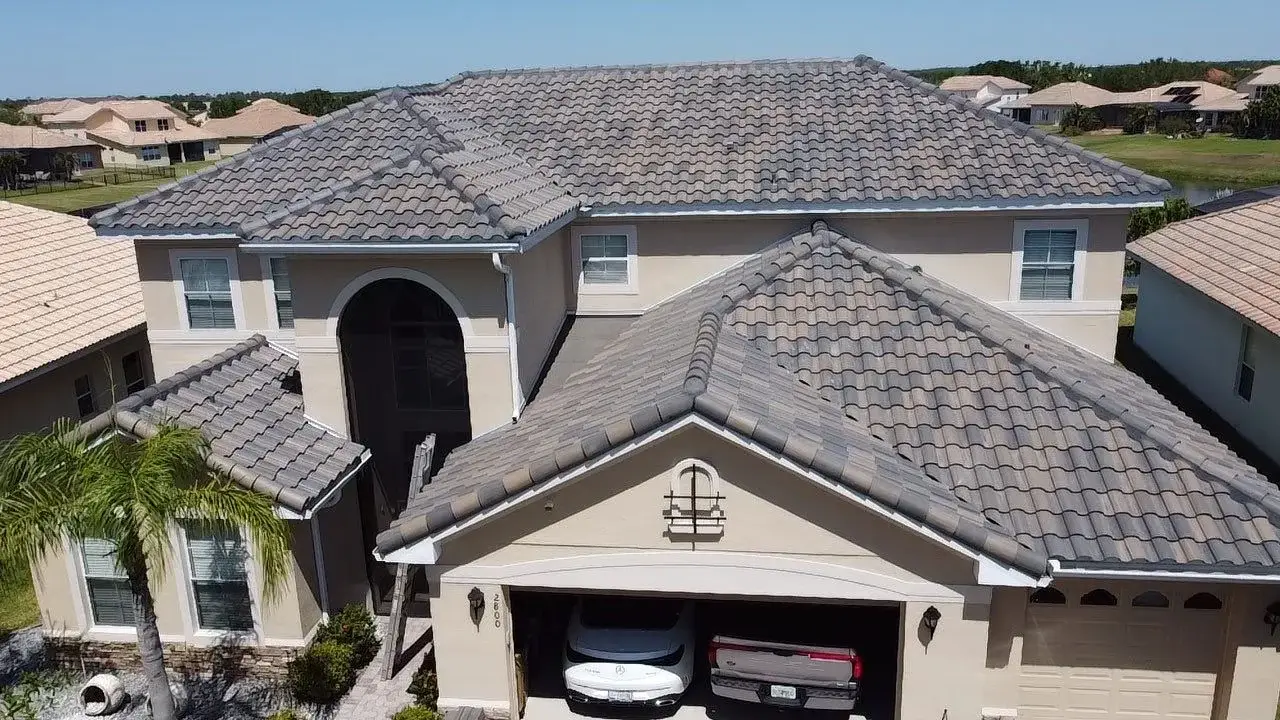




Gray tile roof on a two-story stucco home, photographed from above
★ 4.9 Google · 524 reviews · Central Florida

Tile roofing in Central Florida

Tile brings a defined profile and texture to a home. Whether you are investigating a leak, replacing damaged tiles, or planning a new roof, the assessment needs to consider the assembly beneath the visible surface.

FL License CCC1332542BBB Accredited, A+TAMKO Diamond contractorIn-house crew, family-owned
4.9 star Google customer rating4.9 on Google524 homeowner reviewsBBB Accredited Business, A+ ratingBBB AccreditedA+ rating · accredited since 2021FL licensed contractorCCC1332542 · verify anytimeTAMKO Diamond contractorTAMKO DiamondContractorRoofing Strong Alliance by TAMKORoofing Strong AllianceTAMKO contractor programLocally owned and operated, DeBary, Florida, since 2020Locally ownedDeBary, Florida · since 2020In-house crewOur own W-2 installersFree roof assessmentsWritten options, no pressure

A tile repair starts beneath the surface

A cracked or displaced tile is a visible clue. The condition of the underlayment and surrounding roof still matters when deciding what work is needed. The Tile Roofing Industry Alliance recommends that a qualified roofing contractor assess underlayment before tile repairs.

Ask whether the proposal addresses only the visible tile, an underlying issue, or both. It should explain which area is being opened and how the surrounding roof will be incorporated into the repair.

Replacement has more than one scope

A proposal involving existing tile should clearly describe what will be removed, what may be retained, and how the condition of retained material will be assessed. Do not assume a phrase such as “tile roof replacement” means the same work in every estimate.

If changing roof materials, ask what evaluation the building needs before the proposed system is selected. Product suitability and the structure are part of that discussion.

  • New tile, retained tile, or a combination
  • Underlayment and flashing work
  • Broken-tile and matching provisions
  • Valley, edge, and penetration details
  • Disposal and material handling
  • Applicable product and installation documents

Consider how the roof fits the house

Color, profile, and the way light falls across the roof all influence the finished appearance. Bring a photograph of the exterior and any community requirements into the selection discussion.

For a repair, establish whether matching tile is available and what appearance can reasonably be expected. Make decisions about visible differences before the repair scope is accepted.

Plan access and future care

Discuss where materials will be delivered and stored, how the property will be accessed, and how any other roof-mounted equipment will be handled. Tell the team about previous work or known problem areas.

Keep inspection and repair records. If another trade needs roof access later, ask how that work should be coordinated with the roofing contractor and the manufacturer’s care guidance. A roof assessment is also a useful place to ask which conditions should prompt a follow-up.

Your questions, answered

Do a few broken tiles mean I need a new roof?

They justify an assessment, but the decision depends on the surrounding roof and underlying condition. The visible tiles alone do not define the full repair scope.

Can existing tiles be reused?

That depends on the tiles’ condition, the proposed work, material availability, and applicable installation requirements. Ask for the intended approach in writing.

Why does underlayment matter on a tile roof?

It is part of the roof assembly beneath the tile. Its condition should be assessed before repair work is selected.

The details behind the decision

The tile is only the visible layer.

Tile gives a roof a distinctive profile, but a tile roof must be evaluated as an assembly. Underlayment, flashing, attachment and support matter alongside color and shape. A broken tile and a leak under an otherwise intact tile roof can call for very different scopes of work.

From Pinnacle’s project gallery · Select to enlarge

Read the supporting guidance: IBHS: roof weathering and maintenance · IBHS: roof flashing

01A repair begins with access

Ask how the contractor will reach the affected area and handle surrounding tiles. Walking on tile can cause damage when it is done incorrectly. Matching a discontinued shape or color may also affect the repair plan.

02A material change needs a system review

If you are changing from another roof type, ask who will confirm the suitability of the structure and proposed assembly. Compare the selected profile and attachment details together. Do not rely on appearance alone to establish whether a product fits the home.

03Look at transitions and drainage

Valleys, wall intersections and roof penetrations deserve specific attention. Ask how these locations are detailed and what will be replaced beneath the tiles. The answer helps distinguish a surface repair from a more extensive underlayment or flashing project.

Keep your next step simple

Your tile conversation checklist

0 of 5 ready

Check what you have prepared. Download the list to bring to your roofing conversation.

4.9
524 Google reviews
Google rating

Homeowners across Central Florida rate Pinnacle 4.9 out of 5.

Read them before you call. Ask us anything you read there, and we will answer it straight.

Justin Coltharp, founder and owner of Pinnacle Roofing Group
Choosing a roofer is a big decision. My goal is to make it easier to understand what is happening on your roof, what your options are, and why we are recommending a particular approach.
Justin Coltharp Founder and owner, Pinnacle Roofing Group · DeBary, FL Meet Justin →
Roof questions in Central Florida?(386) 631-5566Free assessment

Let’s figure out what
your roof needs.

Tell us what’s happening. Start with a roof assessment.

Request my roof assessment
Call PinnacleRequest an assessment ↗